%20copy.png)
%20copy.png)
Why behaviour is communication: looking below the surface
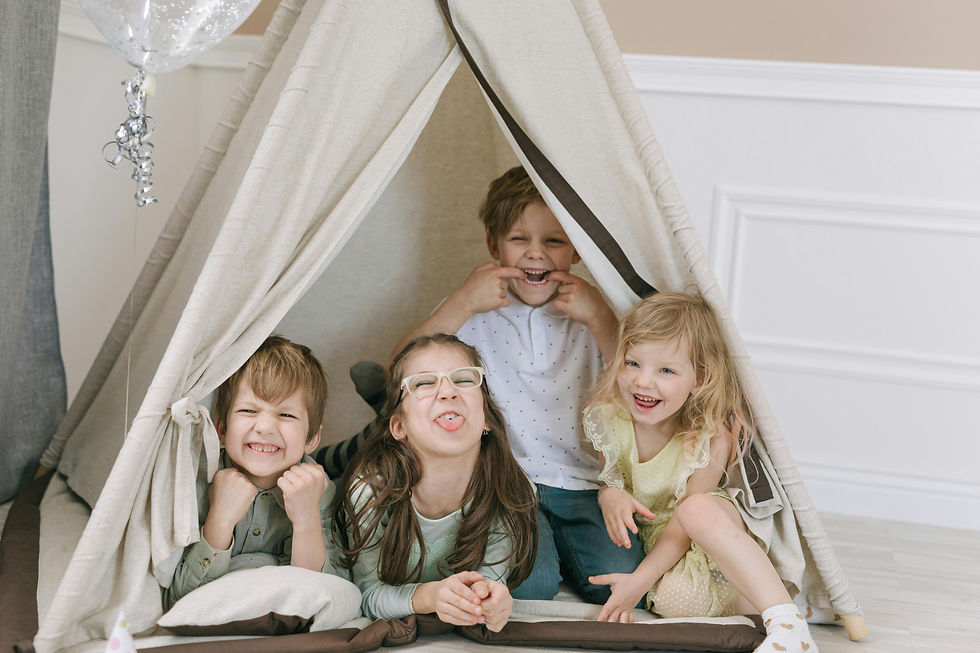
When a child is being silly, melts down, shouts “no,” ignores instructions, or seems deliberately difficult, it can feel personal, disrespectful, or simply bad or naughty behaviour. Many adults were raised with the belief that children "should know better,” “toughen up,” or “just do as they’re told”.
But the science of child development tells us something very different: Behaviour is communication. Especially the behaviour that challenges us the most.
Children and teenagers don’t yet have fully developed emotional regulation, problem-solving, or communication skills. When feelings are big or needs are unmet, behaviour becomes the language they use to tell us something isn’t working for them.
So instead of being triggered of, scared or unaccepting of our kids emotions and emotional responses, we want to be curious. If we can discover what they are telling us and what they need, we are best equip to help meet their needs, or provide the skills they require to manage that need in a way that feels healthy.
The Brain Behind Behaviour
Children’s brains develop from the bottom up. The areas responsible for emotion, stress, and survival responses develop earlier than the areas responsible for reasoning, impulse control, and perspective-taking (the prefrontal cortex).
This means that when a child is overwhelmed, anxious, tired, overstimulated, embarrassed, or disconnected, the emotional brain takes over. In those moments, the thinking brain goes offline.
So when a child is yelling, refusing, kicking something, shutting down, or running away, it is usually not a carefully chosen decision, it is a nervous system response.
Their brain is saying, “This feels too hard”, “I don’t feel safe”, “I’m overwhelmed”, “I don’t know what to do” or, “I need connection, help, or reassurance”. The behaviour may look like defiance, but underneath, it is often distress, dysregulation, or, something we see often in therapy, a missing skill.
Behaviour as a 'bid' for Support
From a behavioural psychology perspective, almost all behaviour serves a function. It helps a person to get something they need, avoid something that feels hard or dangerous (a threat) or express an internal state they don’t yet have words for.
Children don’t yet have the emotional insight or vocabulary adults do. So instead of saying, “I feel embarrassed and overwhelmed because I can’t do this homework, a child might slam the book shut, say “I hate school,” or refuse to try. Instead of saying, “I’m feeling disconnected and need reassurance,” a child might become silly, disruptive, pick a fight, or cling. Insead of saying, “I’m exhausted and my nervous system is overloaded,” a child might melt down over something small, seem “over the top,” or become aggressive.
Challenging behaviour is often a signal, not a character or parenting flaw.
Why Some Kids Show it More
Some kids, especially those who are highly active, sensitive, anxious, or strong-willed. experience emotions more intensely or struggle more with regulation. Their behaviour can look louder, bigger, more physical, or more defiant.
Often, this is not about attitude or personality, it is about a nervous system that gets overwhelmed quickly and doesn’t yet have the tools to settle itself.
When adults respond only with punishment, criticism, or shame, the child’s stress system often escalates further. The original need - for support, structure, reassurance, or regulation - remains unmet and things can escalate fast!
What About Defiance, Cheekiness and Testing Boundaries?
It is true, not all behaviour comes purely from overwhelm or distress. As children grow, they also experiment with independence, power, and limits. Testing boundaries is a normal part of development.
Sometimes behaviour really is a child saying, “do I have to?”, “You can’t make me.” or “I want things my way”.
This can be really frustrating for parents, but it doesn’t mean children are being bad or naughty. It often means that they are learning how the world works, including how relationships, authority, and rules function and they are testing out limits and boundaries to see what happens. Therefore, in these moments, children still need adults to stay calm, be clear and follow through consistently with their rules, boundaries or consequences.
Understanding behaviour as communication does not mean removing limits. In fact, children feel safer when boundaries are steady and predictable. The key difference is how we respond. Instead of reacting with anger or shame, we respond with calm authority, “I know you don’t like this. It’s still time to do it.” We can acknowledge feelings without changing the boundary: “You’re really frustrated about this. I get that. It’s still homework time”.
This teaches children two important things at once i) that feelings are safe and allowed and ii) that limits are real and reliable. That combination builds emotional maturity and if you continue to follow through, your child will quieten down on their limit testing and adapt to the family rules that you hold.
Is this a Soft Parenting Approach?
Parents who try to understand behaviour underneath, often hear things like "you're letting them get away with it, “They just need to learn respect” or “You’re being too soft”.
However, this approach is not permissive, it is structured and skill-building. Traditional discipline often focuses on stopping behaviour in the moment. A brain-informed, developmentally aware approach focuses on teaching the skills that prevent the behaviour long-term. Children don’t learn emotional regulation, problem-solving, or resilience through fear or shame. They learn those skills when adults stay calm and consistent, but follow through on boundaries and consequences. This helps them grow skills to understand their feelings and to know what to do next time.
When this is put into practice, you will often find that this is actually a firmer approach over time, because it builds internal control rather than relying on external control. It says: “Your feelings make sense. Your behaviour still needs guidance.” That balance of empathy and boundaries is what helps children grow into capable, respectful, emotionally aware adults.
What to Say Instead
When we remember that behaviour is communication, our job shifts from shutting behaviour down to helping the child feel understood, regulated, and supported — while still holding clear boundaries. Below are examples of how a parent might respond with both empathy and guidance. Small simple changes in your response can lead to BIG learning!
Big Feelings Meltdown in a 5 year old
What you see: Your 5-year-old is asked to pack away toys and suddenly
screams, throws something, and cries, “I hate you!”
What’s likely underneath: “I’m overwhelmed, I don’t want to stop playing, I don’t
know how to manage this feeling.”
Instead of saying: “Stop it right now! You’re being naughty.”
Try saying: “I can see you’re really upset. It’s hard to stop playing when
you’re having fun. I’m here. Let’s take a breath together first,
then I’ll help you pack up.”
What your child learns:
My big feelings aren’t scary to my parent.
I can be upset and still be loved.
There’s a way through this feeling.
I can calm down with support.
Even when I’m upset, the boundary still stands.
Over time, this builds emotional regulation. Not because you forced it, but because you co-regulated it first.
11 year old Outburst
What you see: Dad asks his son to help with a chore in the garden. The
boy immediately yells, “It’s not fair!” and storms off.
What's likely underneath: “This feels hard. I already feel like I’m not good enough
with Dad. I’ll probably do it wrong. I don’t know how to
cope with that feeling, so I just want to escape.”
Instead of saying “Don’t be so lazy. Get out here now.”
Try saying: “Hey, I can see you got really upset when I asked.
Sometimes when things feel hard, it can come out as
anger. I’m not upset with you — I just want us to work
together. Let’s start with one small job and I’ll show you
what to do.”
What your child learns:
Anger is often a cover for something more vulnerable.
I don’t have to protect myself by pushing people away.
Hard things can be broken into smaller steps.
Dad isn’t against me — he’s alongside me.
I can feel frustrated and still stay connected.
This is where resilience grows — in the space between “this feels hard” and “I can try anyway.”
Teenager Avoiding Responsibilities
What you see: Your teenager says they’re “too tired” to go to school again
and stays in bed.
What’s likely underneath: “I’m anxious. School feels overwhelming. I don’t feel capable
today.”
Instead of saying: “You’re just being lazy. You have to go.”
Try saying: “I get the sense something feels really hard about school
right now. We still need to figure out a way to get you there,
but let’s talk about what feels most overwhelming so we can
tackle it together.”
What they learn:
Avoidance is a signal, not a solution.
My anxiety can be talked about, not hidden.
My parent sees the struggle underneath, not just the behaviour.
I am capable — even when I don’t feel capable.
We face hard things together.
And importantly, they learn that compassion and accountability can exist in the same place.
Seeing behaviour as communication doesn’t mean ignoring rules or allowing chaos. It means looking beneath the surface first, then responding in a way that builds skills, connection, and responsibility. Children need both understanding and structure. When those two work together, behaviour becomes less of a battle and more of a pathway for growth.
A final word to the wise - this strategy does require patience! If you are expecting your child's behaviour to change immediately, you may be in for an unpleasant surprise! Keep in mind that this approach is about long term skill building. You are helping your child's brain develop in a way that they will progressively be able to implement strategies to self regulate and self manage - and this is the dream! The earlier you start, the less battles, meltdowns and slammed doors you will have to endure in the future.


Comments